W²WER²L
HomeLab GoalHighlightsTeamWorksGuidelinesAbout
Contact
HomeLab GoalHighlightsTeamWorksGuidelinesAboutContact
W²WER²L

A university research laboratory dedicated to advancing civil engineering through cutting-edge research in structural, geotechnical, transportation, hydraulic, and materials engineering.

Explore

HomeLab GoalHighlightsTeamWorksGuidelinesAbout

Research

HydraulicsFlood ResilienceDigital TwinsSustainable Materials

Contact

lab@university.eduTel: 051-200-5738LinkedIn
© 2026 WER²L. All rights reserved.Civil & Environmental Engineering Laboratory
    Back to Works
    Synthesis of novel composite material with spent coffee ground biochar and steel slag zeolite for enhanced dye and phosphate removal
    Paper
    Published

    Synthesis of novel composite material with spent coffee ground biochar and steel slag zeolite for enhanced dye and phosphate removal

    September 25, 20240
    Download PDF

    Authors

    SN
    Shazia Noorin Shaikh
    First Author
    DP
    Dr.Tanushree Paul
    First Author
    DG
    Dr.Arnab Ghosh
    Co-Author
    SP
    Sunghyuk Park
    Co-Author

    Abstract

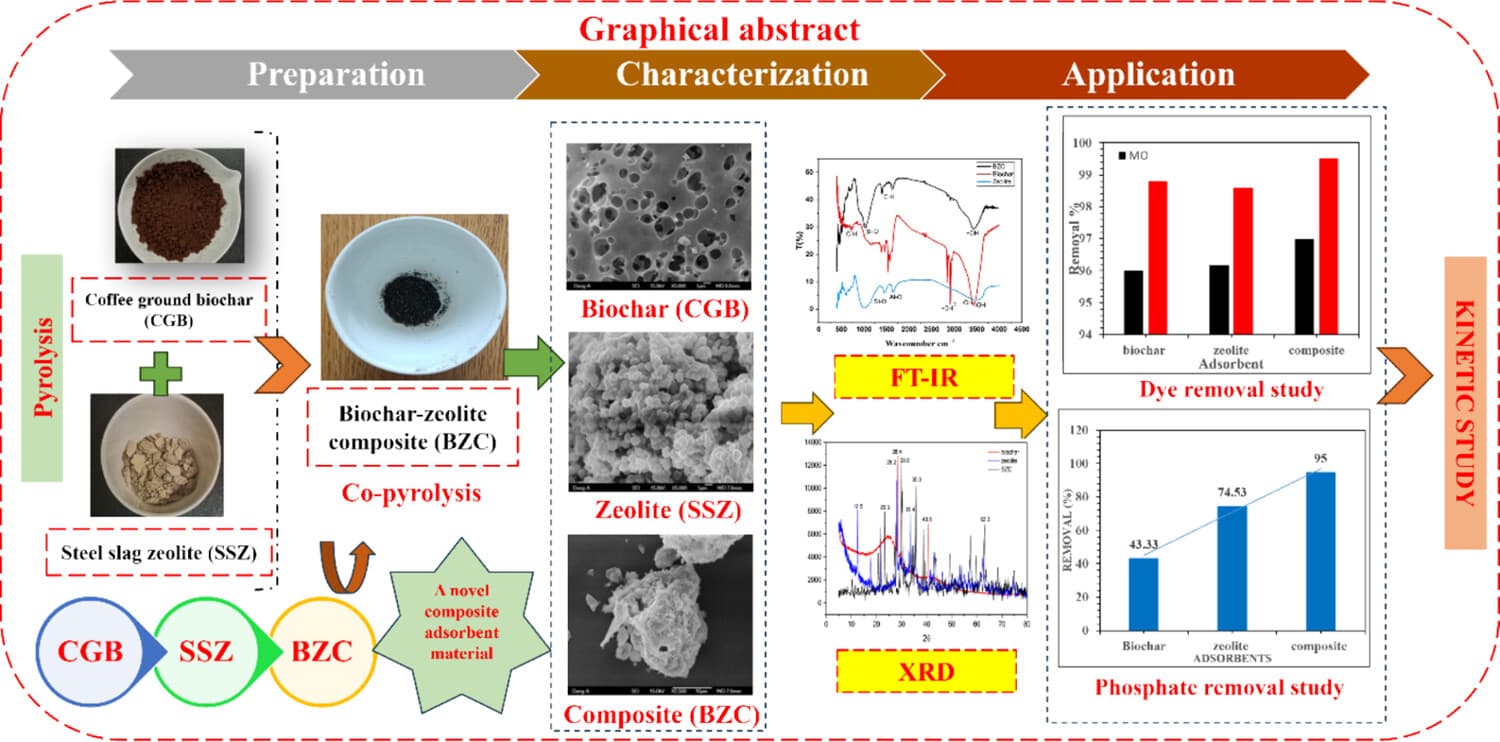
    Rising concerns over water scarcity, driven by industrialization and urbanization, necessitate the need for innovative solutions for wastewater treatment. This study focuses on developing an eco-friendly and cost-effective biochar-zeolite composite (BZC) adsorbent using waste materials—spent coffee ground biochar (CGB) and steel slag zeolite (SSZ). Initially, the biochar was prepared from spent coffee ground, and zeolite was prepared from steel slag; their co-pyrolysis resulted in novel adsorbent material. Later, the physicochemical characteristics of the BZC were examined, which showed irregular structure and well-defined pores. Dye removal studies were conducted, which indicate that BZC adsorption reach equilibrium in 2 h, exhibiting 95% removal efficiency compared to biochar (43.33%) and zeolite (74.58%). Moreover, the removal efficiencies of the novel BZC composite toward dyes methyl orange (MO) and crystal violet (CV) were found to be 97% and 99.53%, respectively. The kinetic studies performed with the dyes and phosphate with an adsorbent dosage of 0.5 g L−1 suggest a pseudo-second-order model. Additionally, the reusability study of BZC proves to be effective through multiple adsorption and regeneration cycles. Initially, the phosphate removal remains high but eventually decreases from 92% to 70% in the third regeneration cycle, highlighting the robustness of the BZC. In conclusion, this study introduces a promising, cost-effective novel BZC adsorbent derived from waste materials as a sustainable solution for wastewater treatment. Emphasizing efficiency, reusability, and potential contributions to environmentally conscious water treatment, the findings highlight the composite's significance in addressing key challenges for the removal of toxic pollutants from the aqueous solutions.

    Related Works

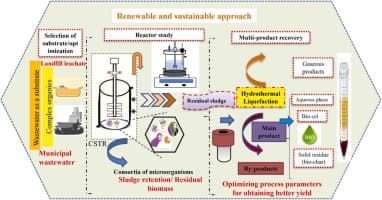
    Biochar-assisted aerobic granulation in enhanced biological treatment of landfill leachate with municipal wastewater for sustainable resource recovery: A biorefinery approach
    Paper2025

    Biochar-assisted aerobic granulation in enhanced biological treatment of landfill leachate with municipal wastewater for sustainable resource recovery: A biorefinery approach

    View work 0
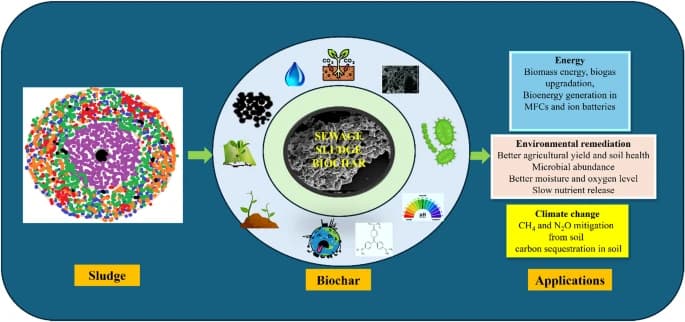
    Aerobic Granular Sludge as a Resource for Sludge-Based Biorefineries: Advances, Challenges, and Circular Economy Potential
    Paper2026

    Aerobic Granular Sludge as a Resource for Sludge-Based Biorefineries: Advances, Challenges, and Circular Economy Potential

    View work 0
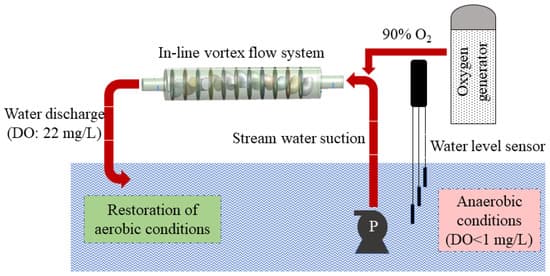
    Stream Water Quality Control and Odor Reduction through a Multistage Vortex Aerator: A Novel In Situ Remediation Technology
    Paper2023

    Stream Water Quality Control and Odor Reduction through a Multistage Vortex Aerator: A Novel In Situ Remediation Technology

    View work 0
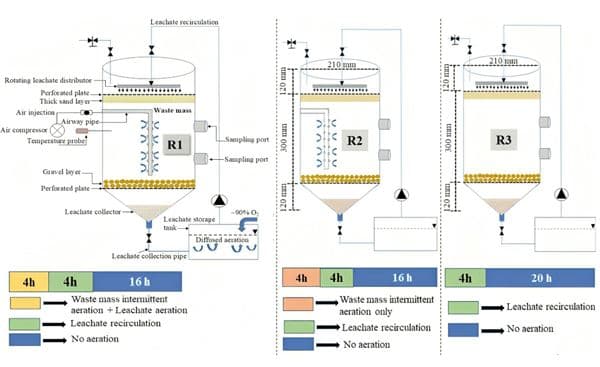
    Oxygenated Leachate Recirculation for Enhanced MSW Stabilization and Landfill Space Reclamation: Lab-Scale Bioreactor Insights
    Paper2025

    Oxygenated Leachate Recirculation for Enhanced MSW Stabilization and Landfill Space Reclamation: Lab-Scale Bioreactor Insights

    View work 0