W²WER²L
HomeLab GoalHighlightsTeamWorksGuidelinesAbout
Contact
HomeLab GoalHighlightsTeamWorksGuidelinesAboutContact
W²WER²L

A university research laboratory dedicated to advancing civil engineering through cutting-edge research in structural, geotechnical, transportation, hydraulic, and materials engineering.

Explore

HomeLab GoalHighlightsTeamWorksGuidelinesAbout

Research

HydraulicsFlood ResilienceDigital TwinsSustainable Materials

Contact

lab@university.eduTel: 051-200-5738LinkedIn
© 2026 WER²L. All rights reserved.Civil & Environmental Engineering Laboratory
    Back to Works
    Valorization of waste mussel shells and spent coffee grounds into calcium-rich biochar for sustainable phosphate recovery for soil amendment
    Paper
    Published

    Valorization of waste mussel shells and spent coffee grounds into calcium-rich biochar for sustainable phosphate recovery for soil amendment

    November 15, 20250
    Download PDF

    Authors

    EJ
    Eraliev Javokhirbek
    First Author
    DG
    Dr.Arnab Ghosh
    Co-Author
    DP
    Dr.Tanushree Paul
    Co-Author
    SP
    Sunghyuk Park
    Corresponding

    Abstract

    This study investigates the synthesis and characterization of CaO-rich biochar composites produced through the pyrolysis of waste mussel shells and spent coffee grounds at 800 °C. Biochar exhibited a mesoporous structure characterized by an average pore size of 37.7 nm and a surface area of 37.8 m2/g. The composite with a 1:1 mass ratio of mussel shells to coffee grounds (designated as MSBC1:1) has a superior maximum phosphate adsorption capacity of 375.6 mg/g. The adsorption process corresponded to the Langmuir isotherm and pseudo-second-order kinetics, indicating a predominant mechanism of monolayer chemisorption. Phosphate was mostly removed by electrostatic attraction, surface complexation, and the precipitation of hydroxyapatite (Ca5(PO4)3(OH)). Thermodynamic assessments confirmed that the adsorption is spontaneous (ΔG° < 0), endothermic (ΔH° > 0), and driven by entropy. MSBC1:1 composite exhibited strong resistance in a wide pH range (2−12) and ionic strengths (0–0.1 M NaCl), highlighting its practical significance for environmental remediation applications. Furthermore, MSBC1:1 achieved high phosphate removal efficiencies (76.5–97.3 %) in real lake, river, and sewage waters, demonstrating strong potential for practical environmental remediation. The phosphate (P)-laden MSBC1:1 biochar served as an effective slow-release fertilizer, achieving significant improvements in radish (Raphanus sativus L.) growth metrics: a 10.2 % increase in germination rates, a 9.7 % enhancement in plant height, and increases in wet and dry biomass of 28.5 % and 63.1 %, respectively, compared to the control treatment. Furthermore, the use of P-laden MSBC1:1 improved soil pH and reduced salt concentrations compared to raw biochar and the control treatment.

    Related Works

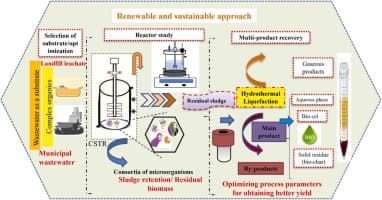
    Biochar-assisted aerobic granulation in enhanced biological treatment of landfill leachate with municipal wastewater for sustainable resource recovery: A biorefinery approach
    Paper2025

    Biochar-assisted aerobic granulation in enhanced biological treatment of landfill leachate with municipal wastewater for sustainable resource recovery: A biorefinery approach

    View work 0
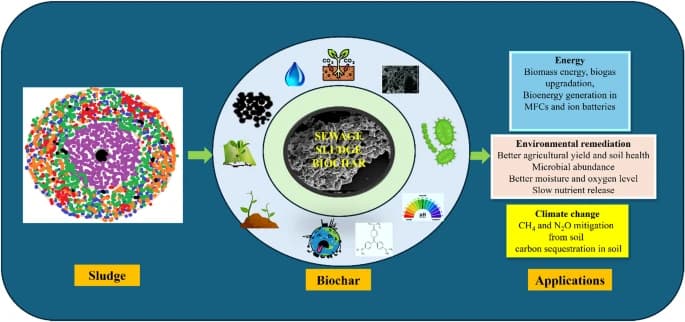
    Aerobic Granular Sludge as a Resource for Sludge-Based Biorefineries: Advances, Challenges, and Circular Economy Potential
    Paper2026

    Aerobic Granular Sludge as a Resource for Sludge-Based Biorefineries: Advances, Challenges, and Circular Economy Potential

    View work 0
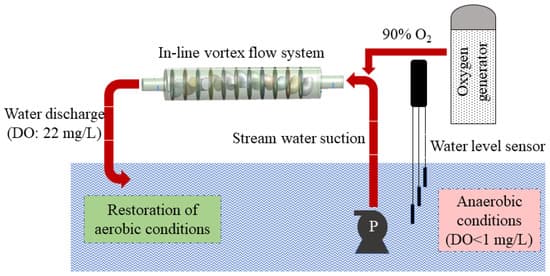
    Stream Water Quality Control and Odor Reduction through a Multistage Vortex Aerator: A Novel In Situ Remediation Technology
    Paper2023

    Stream Water Quality Control and Odor Reduction through a Multistage Vortex Aerator: A Novel In Situ Remediation Technology

    View work 0
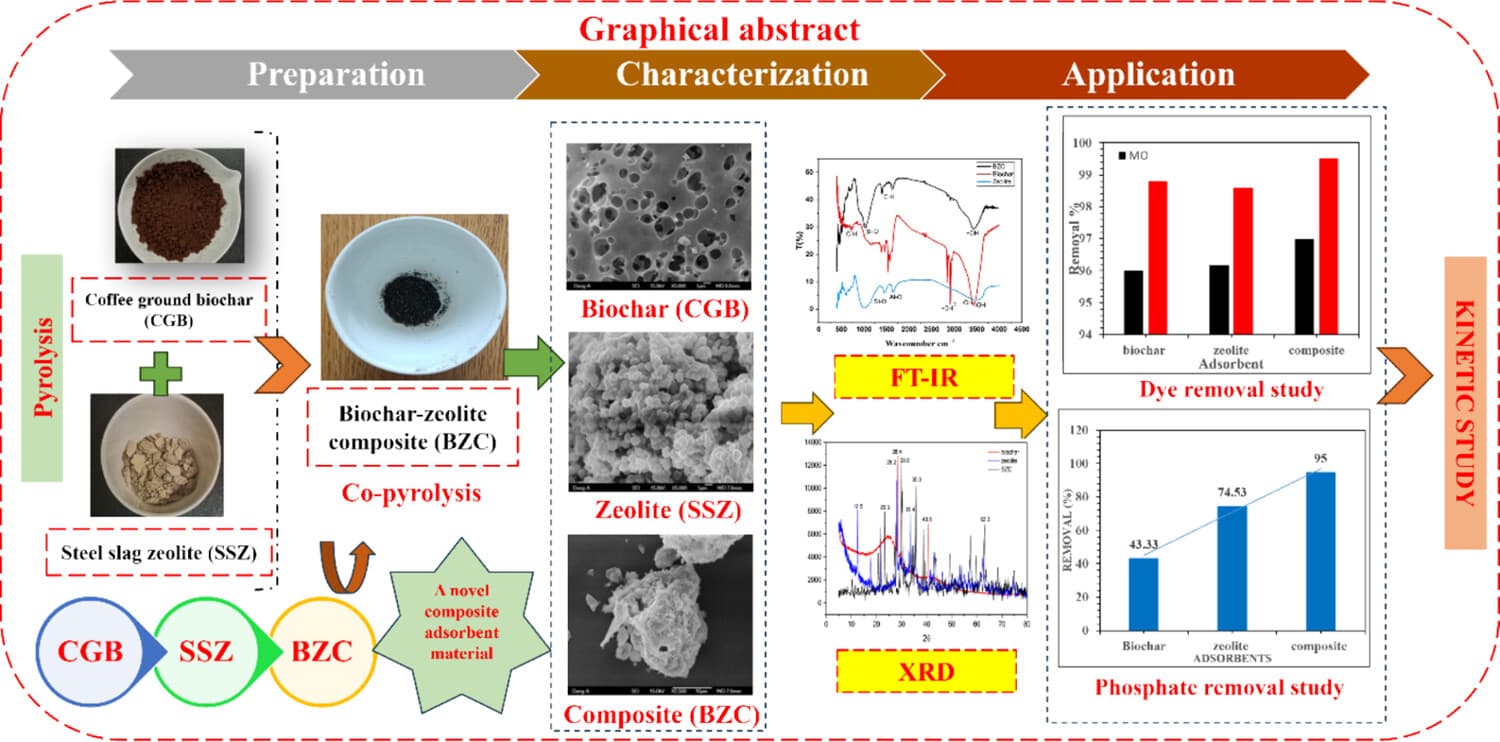
    Synthesis of novel composite material with spent coffee ground biochar and steel slag zeolite for enhanced dye and phosphate removal
    Paper2024

    Synthesis of novel composite material with spent coffee ground biochar and steel slag zeolite for enhanced dye and phosphate removal

    View work 0